Precision Agriculture: Teaching AI where not to spray
Training AI to tell crops from weeds, plant by plant.
How we joined Blue River’s Technology team to train the computer vision models behind these plant-by-plant spraying decisions.
About the Client
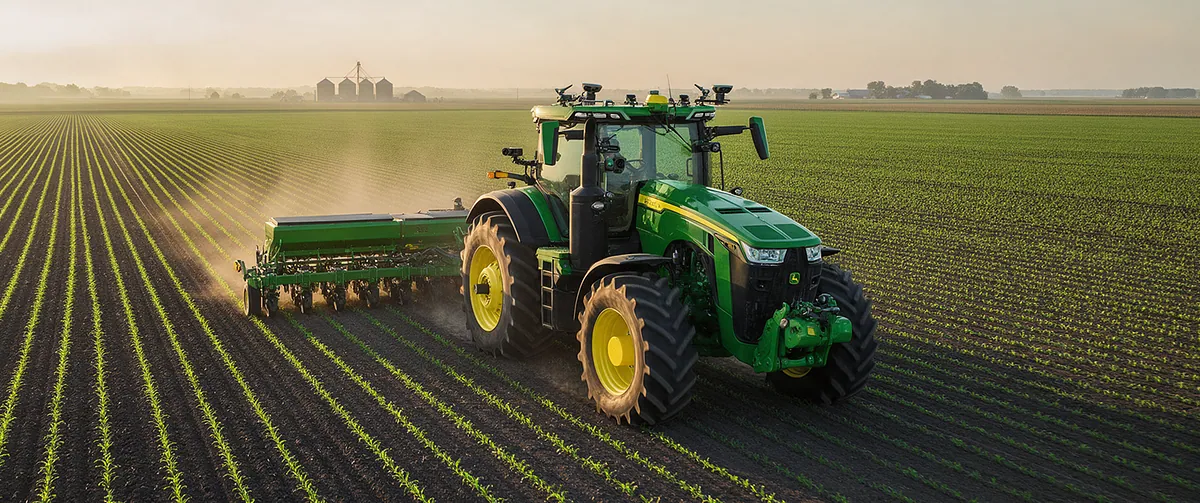
John Deere has manufactured agricultural equipment for nearly 190 years and is the largest U.S. manufacturer of farm machinery. In recent years, the company has positioned itself as much a technology business as an equipment one, combining machinery with software, data, automation, and AI to help producers use fewer inputs more precisely.
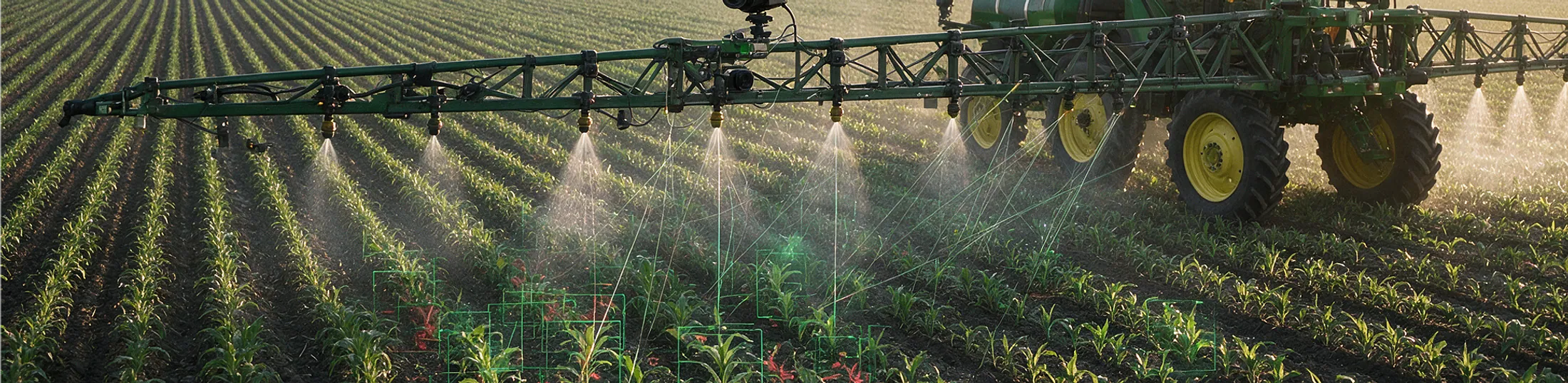
In 2017, John Deere acquired Blue River Technology, the team specializing in computer vision and machine learning for agritech that had been developing See & Spray, a system designed to apply herbicides with far greater precision than traditional field-wide spraying.
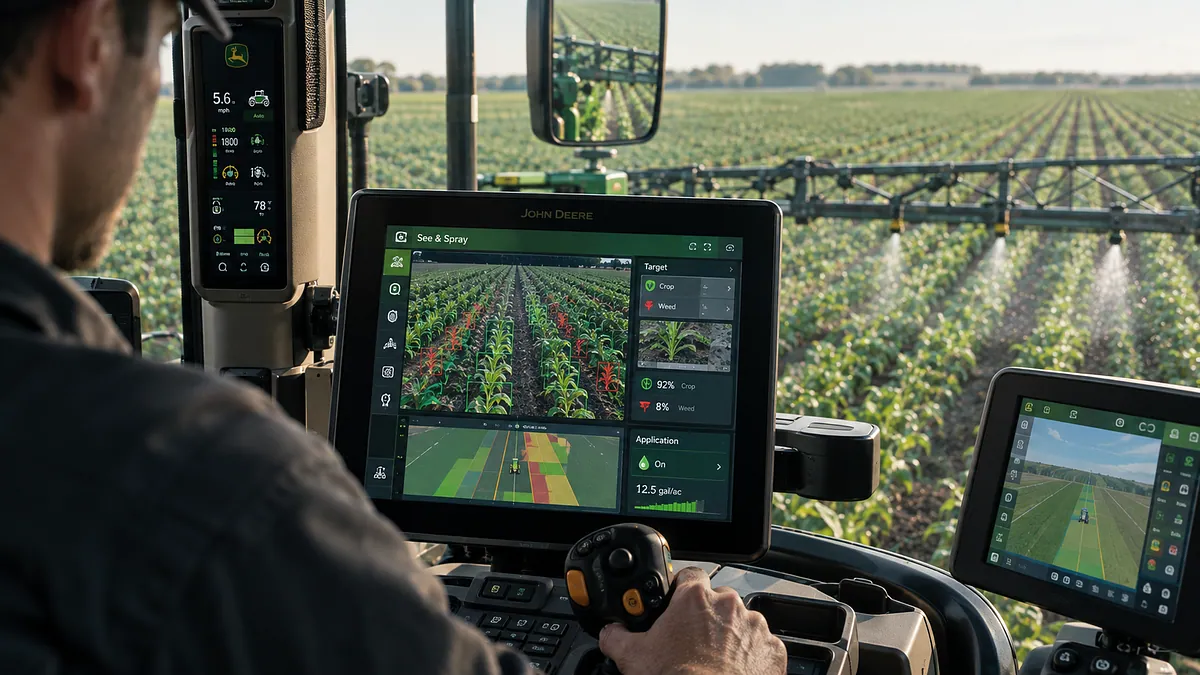
How do you teach AI to tell a crop from a weed while the machine is moving through the field?
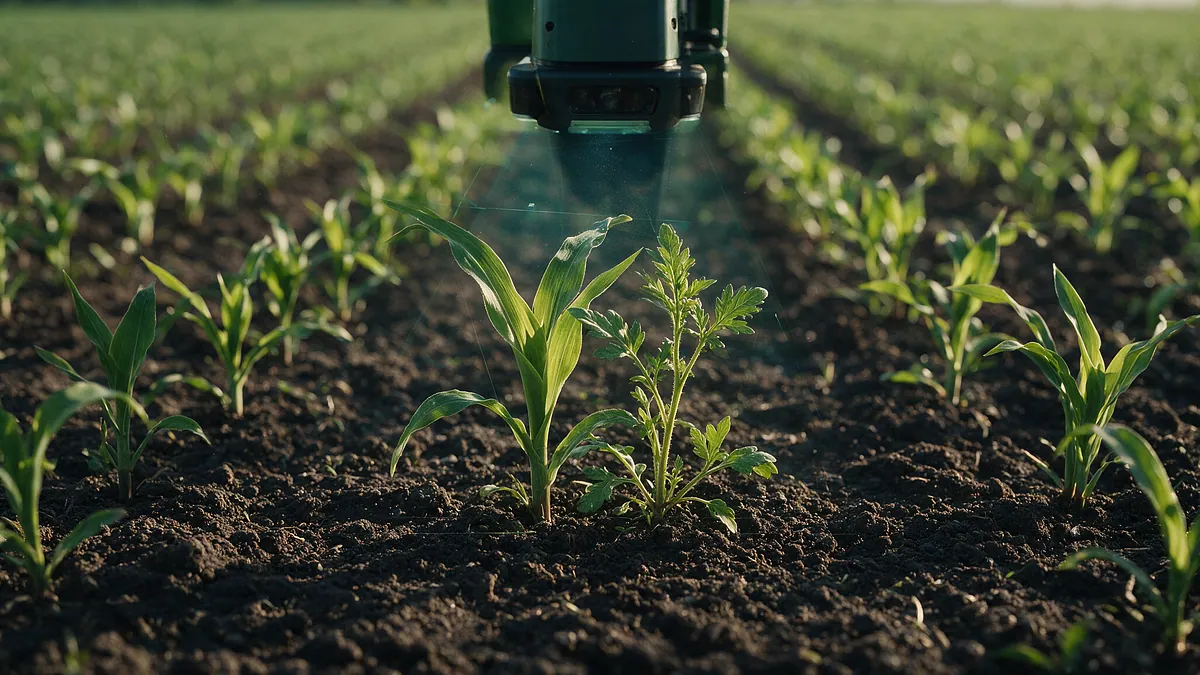
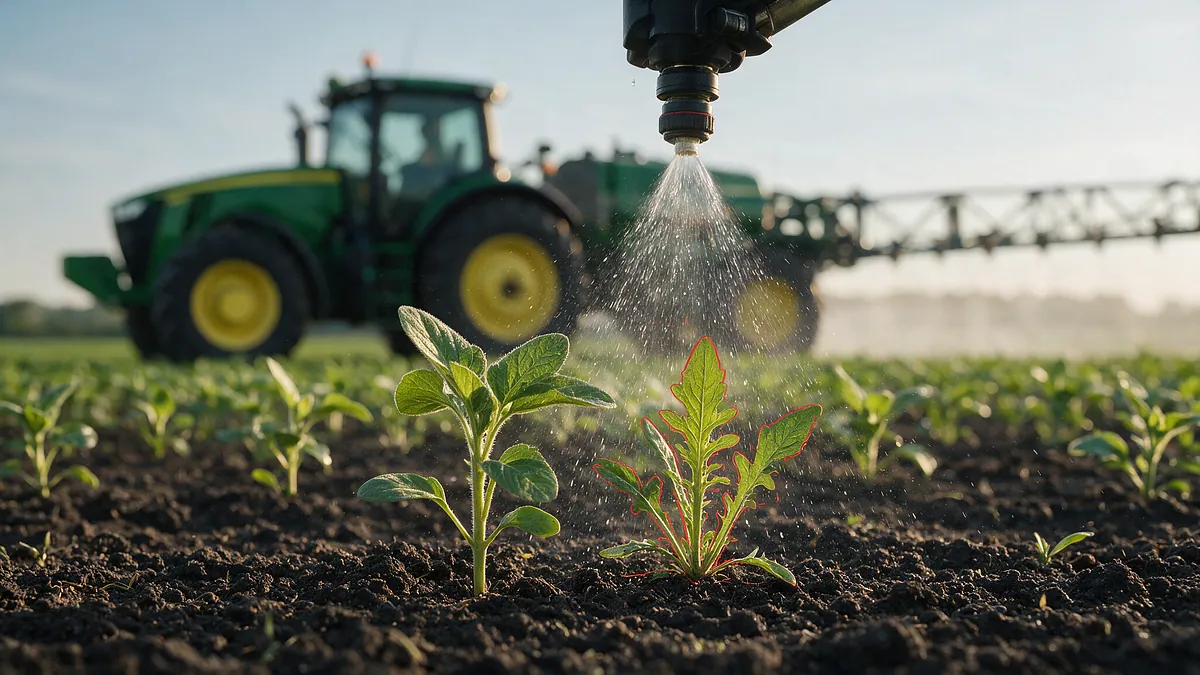
Distinguishing a crop from a weed sounds like a simple visual task. In a real field, it isn’t. Lighting changes throughout the day, weeds mimic the shape of crops at early growth stages, and a tractor moving through the rows can’t stop to double-check a borderline case. What the model needs to catch is usually small: a weed at its earliest, easiest to miss stage, not a full-grown plant with an unmistakable shape.
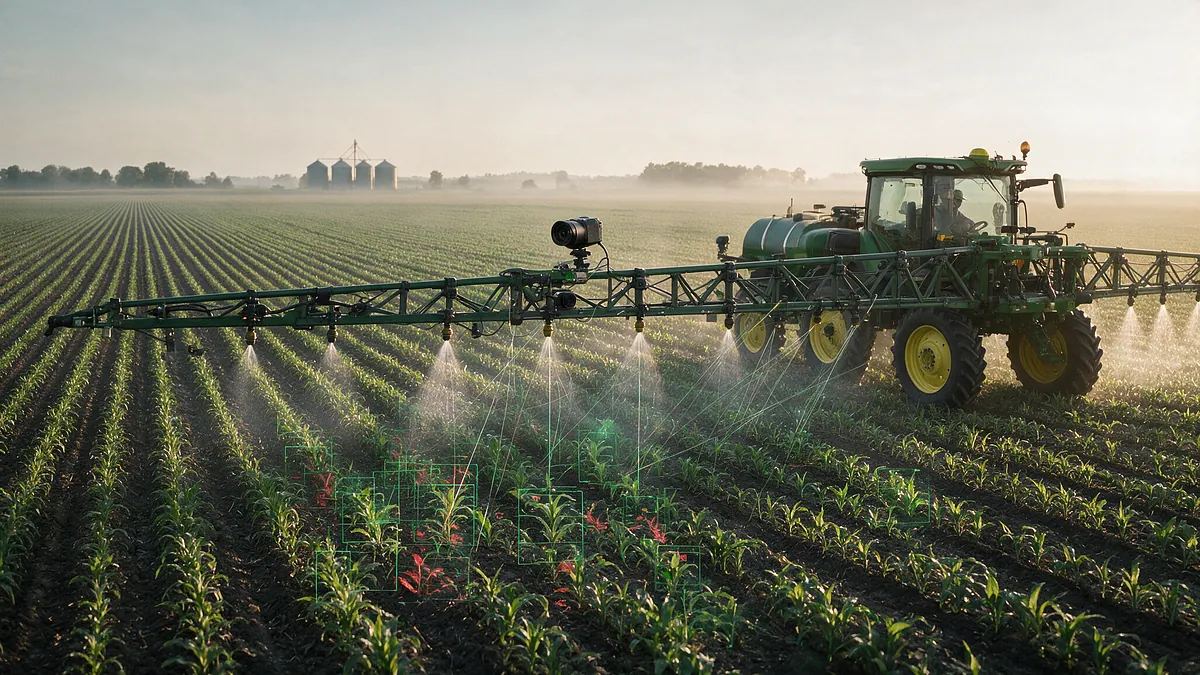
Blue River’s team already had the concept for precision agriculture spraying: identify each plant individually, and only spray herbicide where a weed actually is. What they needed was a way to turn that concept into a live decision a machine could act on, in the same instant it had to be made.
None of that could work if the classification model was only accurate in a lab. It had to hold up against light changes, plant variability, and the physical constraints of hardware mounted on a moving tractor.
Blanket spraying carries its own economic and operational cost: applying herbicide across an entire field, whether or not a weed is actually there, increases chemical use and operating costs while treating crops and soil that didn’t need it.A false positive could cause the system to spray a crop, while a false negative could leave a weed untreated long enough to spread. The challenge was training models that could support reliable, plant-by-plant decision under real operating conditions.
Working through a similarly specialized AI problem? Let’s talk about what you’re trying to classify
Talk to our teamWhat was at stake for John Deere if the AI model got the call wrong?
Getting this wrong carried a cost in both directions. A model that missed weeds meant the underlying promise of precision agriculture simply didn’t hold, and John Deere could be shipping an AI feature nobody could trust at the plant level. A model that misclassified crops as weeds risked damaging the very plants the system was supposed to protect.
For a company positioning itself as a leader in agritech, shipping an AI feature that couldn’t be trusted at the plant level carried a cost beyond this one product: it was a test of whether that broader positioning held up under real field conditions.
What did we build for Blue River’s precision spraying system?
We worked as an extension of Blue River Technology’s own team, which already had people working toward precision spraying but hadn’t yet built this specific capability: computer vision models that could tell a crop from a weed, plant by plant, in real time.
We joined the team directly, and we had real latitude in the technical decisions involved, including which approaches to use for training and validating the models, rather than execute a pre-defined spec.
That also meant knowing when to push back. When an approach didn’t look like the right one, we said so, and worked through it with their team rather than defaulting to what had originally been proposed.
Have a machine learning capability that needs to hold up outside the lab? Let’s talk about what production-ready would actually take.
Talk to our teamWhich product and technical decisions shaped the weed detection system?
Training the weed-detection model from scratch, together with Blue River’s team
Nothing like this capability didn’t exist in the product yet, so there was no prior version to build from and no in-house benchmark to validate against.
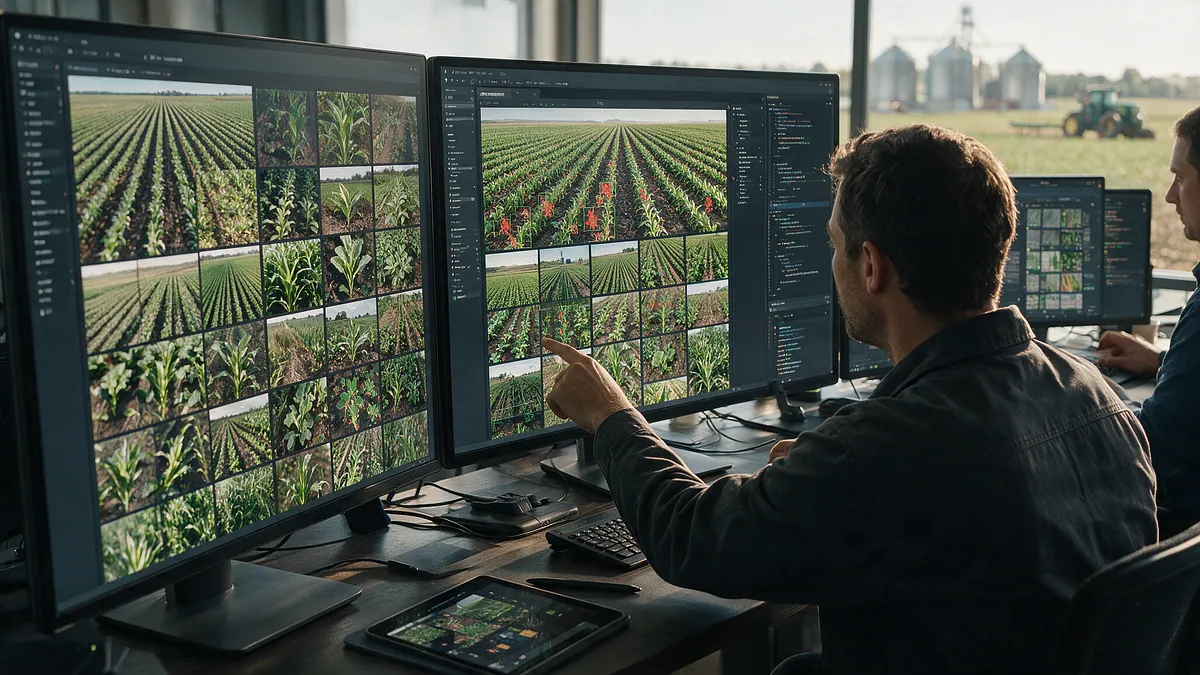
Faced with the gap, we joined Blue River’s team to build the capability directly: training the computer vision models in Python and PyTorch, and building the systems needed to feed field data.
Choosing how to approach training and validation was one of the earliest, highest-stakes calls in the project, since a wrong early choice would have had little precedent to catch it against.
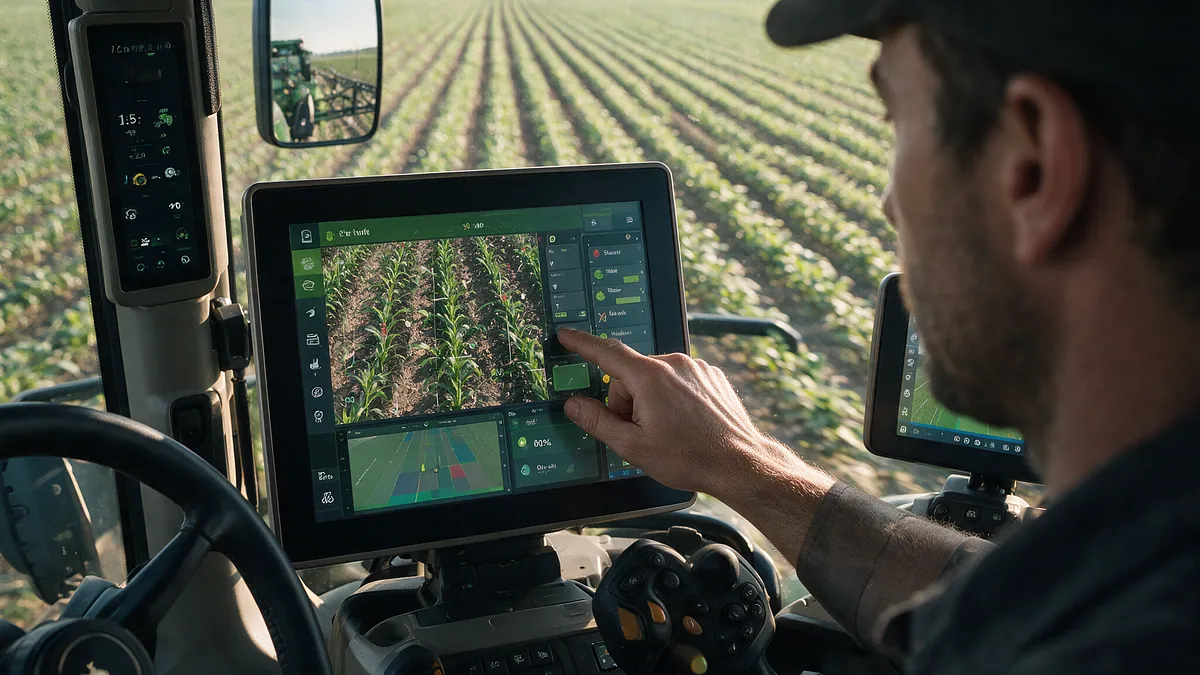
Redesigning the cab interface for real field conditions
Training the models required real field data: a way for the crew to mark where weeds were and record footage as the tractor moved through the field. This first version of that interface used a screen with buttons mounted in the cab, and testing surfaced something lab validation hadn’t: the buttons were too small to operate reliably while the machine was in motion. We treated that as part of the deliverable, not a separate problem, and adjusted the interface based on what the real field environment demanded, since inconsistently collected field data would have limited how well the models could be trained.
What changed once the models went into the field?
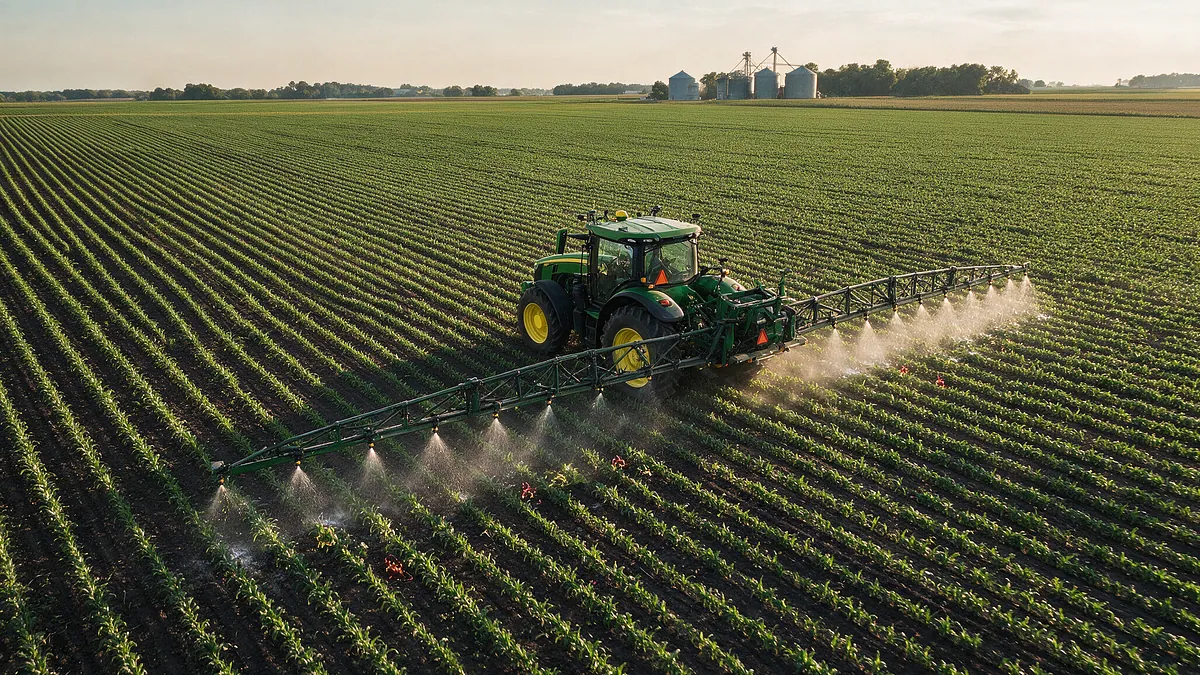
The models we helped train contributed to See & Spray’s ability to distinguish crops from weeds in real time, supporting plant-by-plant spraying decisions in the field. Identifying a plant stopped being a manual or conceptual exercise: it became something the models could do live, directly informing the decision to apply herbicide where a weed was detected while leaving crops untreated.
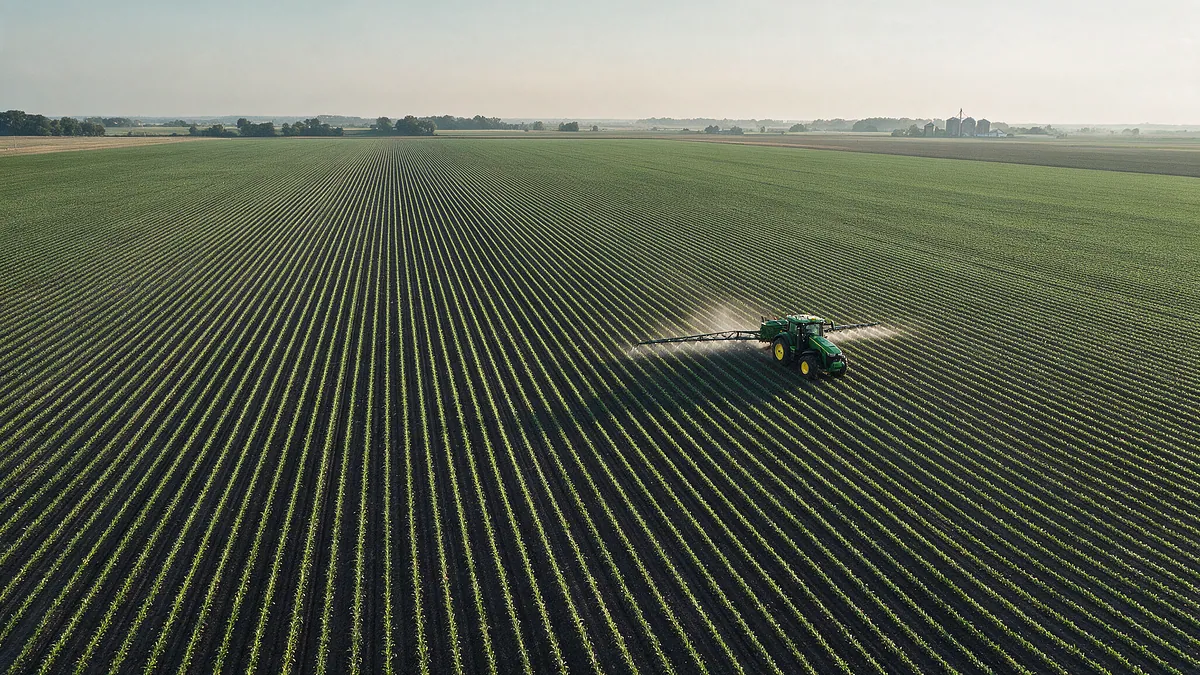
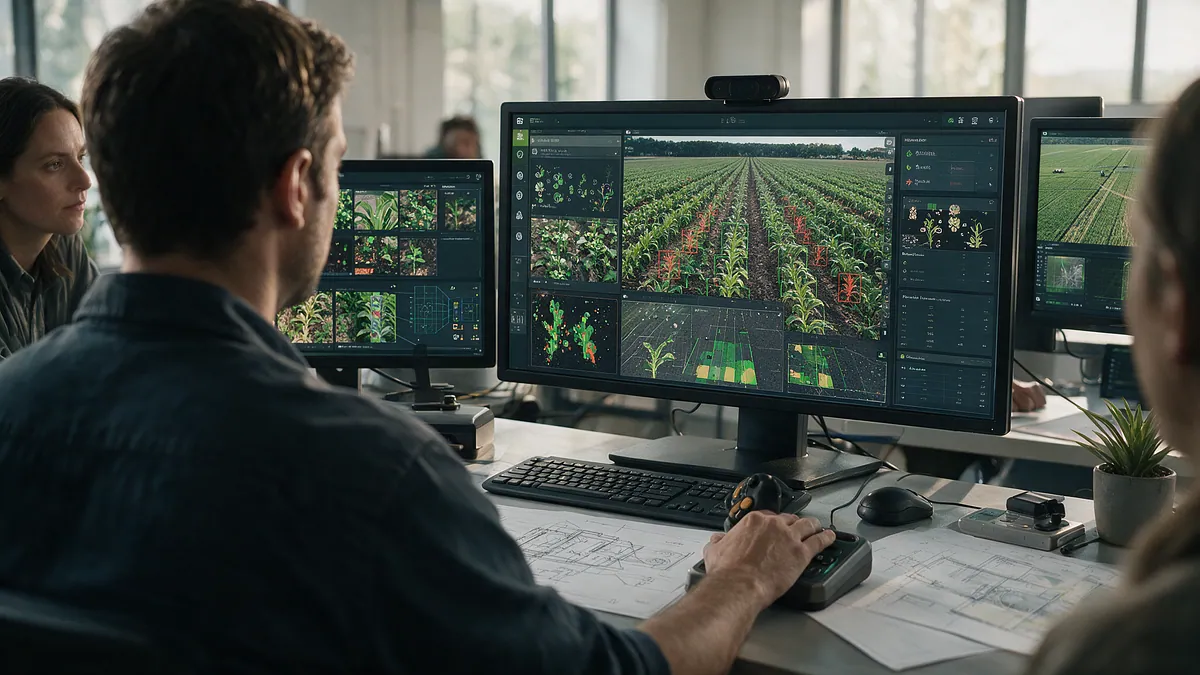
Just as important, the team gained a way to monitor how the models were actually behaving once deployed, instead of relying only on how they performed in the lab.
Why does this project matter?
Most computer vision problems aren’t really about accuracy. They’re about what happens after the model makes a call. Whether the action it triggers is reversible, cheap to get wrong, or something else entirely. In agriculture, a misclassified plant doesn’t just cost accuracy points. It costs a plant, or a chemical applied where it shouldn’t have been. That’s a different kind of problem than most AI projects, and it changes what “good enough” means.
It also compounds with scale. Precision agriculture systems typically operate across thousands of hectares, so a small classification error doesn’t stay small. Crops and soil also follow their own cycles, and a mistake that affects them isn’t something a business can undo quickly or cheaply. John Deere also operates far beyond a single market, so a system like this one doesn't stay contained to one farm or one region: its decisions ripple out across the food supply chain it's part of.
Curious what a computer vision partner could take off your plate? Let’s talk about your product’s hardest classification problem.
GET STARTEDFrequently asked questions
How do you validate a computer vision model for something that has to work in a real field, not just a lab?
We test early against real operating conditions (lighting, growth-stage variability, hardware constraints), not just held-out lab data.
What happens when a client’s proposed technical approach isn’t the one you’d recommend?
We say so, and work through trade-offs together before building, not after.
How do you take on an AI capability that doesn’t exist yet anywhere in the product?
By making the foundational technical decisions ourselves, with the client’s underlying goal as the starting point.
What does it take to move a computer vision model from a working prototype to something that can run inside physical equipment?
It means testing earlier against the real hardware and environment, not just against dataset constraints you only find in the field, like a cab interface that’s hard to use in motion, can matter as much as the model’s accuracy.